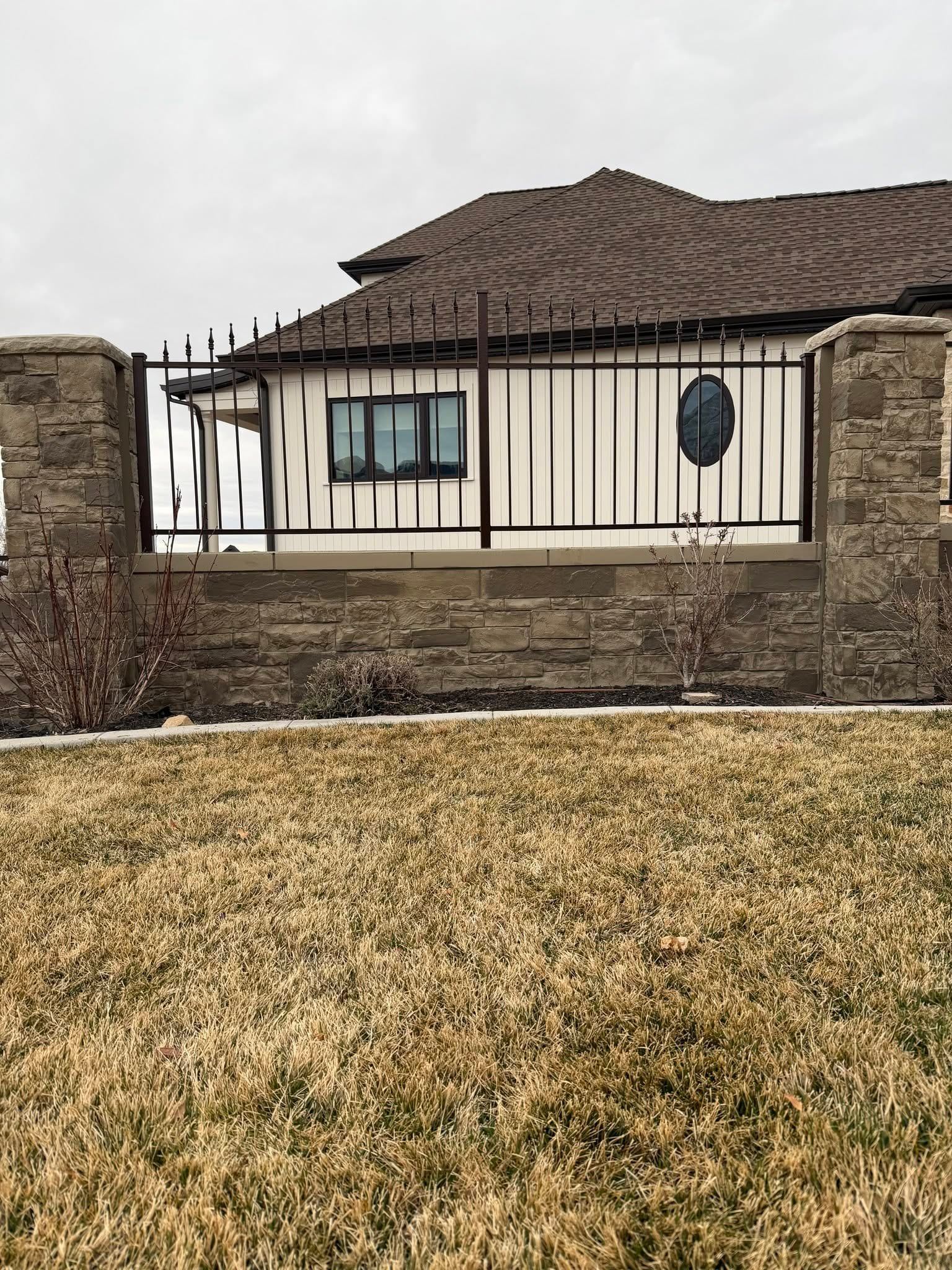
A gate is the part that moves.
Which is why it gets the heaviest posts, the deepest footings and the most attention. Built to match the fence it hangs in, so it reads as part of the run rather than a hole in it.
Three gates, and the one you need depends on what goes through it.
Drawn to scale at the widths they are usually built. Set your own opening in the builder and the drawing follows it.
Walk gate
One leaf, 3 to 6 ft
Person width. Self-closing hinges and a lockable latch if you want it to shut behind you every time.
Single drive gate
One leaf, 8 to 16 ft
One leaf across a drive. Simpler than a pair, but it needs a serious hinge post to carry the swing.
Double drive gate
Two leaves, 10 to 24 ft
Two leaves meeting in the middle, with a drop rod pinning the passive one into the ground.
The hardware is the part that decides whether you still like the gate in five years.
All of it is fitted in the shop and set out on the drawing, so nothing is improvised on site.
- Drop rod
Pins the passive leaf into the ground
- Cane bolt
Heavier drop pin for a drive gate
- Self-closing hinges
Swings shut on its own
- Lockable latch
Takes a padlock
- Posts
Sized to the leaf
A 14 ft double gate does not hang on a fence post. Heavier steel, deeper concrete.- Frame
Welded square tube
Braced on the diagonal so the leaf cannot drop out of square.- Infill
Matches the fence
Privacy panel, slat, ranch rail, pipe or ornamental picket.- Finish
Bare or powder
Including the eight wood-grain finishes, so a gate in a wood-look fence disappears into it.
Measure the opening. We do the rest.
Set the clear width, the height and the style. You get an estimate and a scale elevation showing hinges, latch and drop rod exactly where they will go.